Prudence in Politics
A Speech given by Pat Musto
The Men's Ecumenical Group, Dallas, PA, March 24, 2026
Download PDF Version
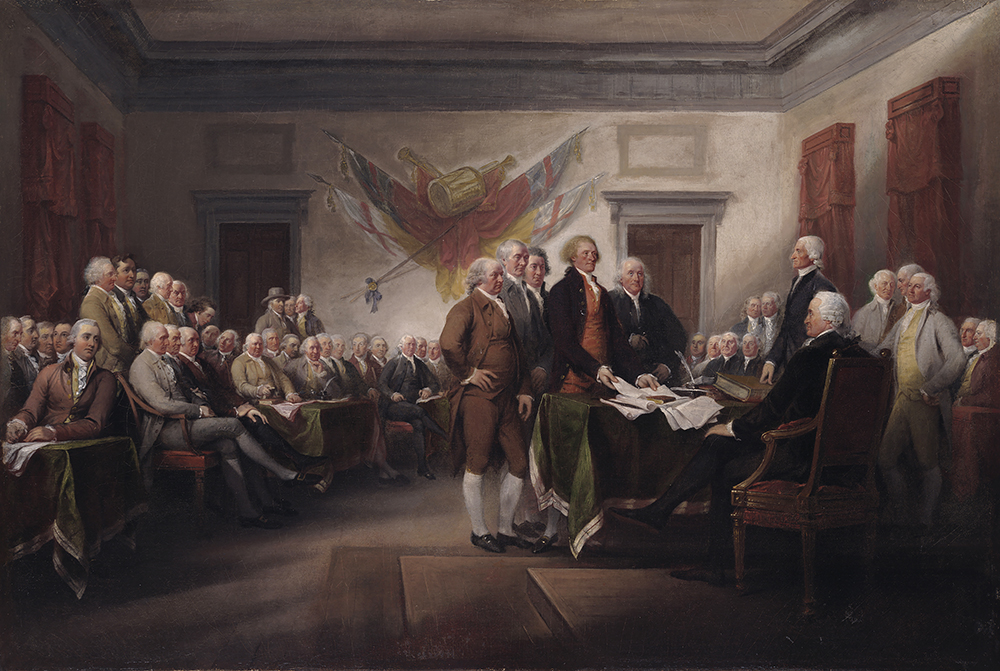
After more than twenty years in the arena of politics, I have come to a conclusion that is both difficult to say and necessary to confront: something essential has been lost in the character of our public leadership. I have not observed this from a distance, but from within—through campaigns, in governance, and in the daily responsibilities that shape public life. And over time, one truth has become increasingly clear to me: too many candidates enter public office lacking not only firm principles, but the prudence required to apply them, and at times, even a basic understanding of the circumstances they are entrusted to govern.
This is not a casual observation, nor is it a cynical one. It is a hard-earned conclusion drawn from years of watching decisions made without discipline, positions taken without conviction, and leadership exercised without clarity. Because without wisdom, there can be no true discernment—and without discernment, there can be no real understanding. And where understanding is absent, judgment falters, and the public trust is diminished.
It is from that perspective—shaped by experience, guided by principle, and grounded in a concern for the integrity of public life—that I offer my remarks this morning.
We are governed, too often, by officials who prize self-image over sound judgment, who surrender principle for accommodation, and who act without a serious grasp of the conditions they are entrusted to steward. The American constitutional order was not designed for vanity or improvisation. It was constructed upon the sober assumption—articulated by James Madison in Federalist No. 51—that men are not angels, and therefore power must be restrained, ambition countered, and public duty disciplined by structure. Likewise, Edmund Burke warned that prudence is the first of all virtues in statesmanship—not rigidity, not impulse, and certainly not applause-seeking display. Yet in our own time, prudence is often dismissed as weakness, compromise confused with surrender, and self-promotion mistaken for leadership. A republic cannot endure on performance; it requires seriousness of mind and steadiness of character. Public office is not a platform for self-expression—it is a trust to be exercised with humility, restraint, and courage.
THE CALL TO WISDOM
Friends, In the Book of Proverbs, we are told: “Wisdom is the principal thing; therefore get wisdom: and with all thy getting get understanding.” Not power. Not victory. Not applause. Wisdom. Scripture is remarkably consistent on this point. Again and again, we are reminded that strength without wisdom becomes recklessness, that conviction without discernment becomes cruelty, and that authority without humility becomes corruption. And yet, when we look at our public life today— when we look honestly at our politics, even within our own party— —we have to admit that wisdom often feels like the rarest commodity of all. We talk endlessly about leadership. We praise boldness. We reward confidence. We celebrate those who speak loudly, decisively, and without hesitation. But Scripture elevates a quieter virtue. A harder virtue. A virtue that restrains before it acts. That virtue is prudence.
WHAT PRUDENCE REALLY IS
Prudence is not weakness. It is not fear. It is not indecision. Prudence is wisdom applied to action. It is moral clarity guided by discernment. It is the discipline of holding fast to what is true while fully understanding the reality in which truth must be lived out. A statesman’s prudence can be described as this: An acknowledgment of principles and a profound understanding of circumstances. That sentence may sound abstract. Even academic. But it carries deep spiritual weight— and it speaks directly to the moment we are living in. Especially for those of us who are Republicans. And especially for those of us who are people of faith.
PRINCIPLES: THE MORAL ANCHOR
Let us begin with principles. Principles are not opinions. They are not preferences. They are not whatever happens to be popular at the moment. Principles are enduring truths. For people of faith, principles are rooted in the belief that truth exists, that right and wrong matter, and that human dignity is not negotiable. Justice. Honesty. Responsibility. Stewardship. Respect for life. Faithfulness to promises. These are not partisan ideas. They are moral foundations. At their best, Republican principles have aligned closely with these truths. Limited power—because human nature is fallen. Personal responsibility—because moral agency matters. Local control—because community matters. Stewardship—because resources are not infinite. These principles were never meant to serve selfishness. They were meant to preserve ordered liberty. But principles alone are not enough.
CIRCUMSTANCES: REALITY WITHOUT SURRENDER
Scripture never teaches that righteousness is simply about holding correct beliefs. It is about living them wisely. This is where circumstances enter the picture. Circumstances are not excuses. They are realities. They include facts. Limits. Consequences. Timing. Human complexity. Jesus understood this deeply. He did not abandon truth— but He understood when to speak, how to speak, and to whom. He spoke differently to Pharisees than to fishermen. He confronted hypocrisy directly. He treated the broken with gentleness. Understanding circumstances does not mean surrendering principle. It means stewarding it. Prudence refuses two dangerous extremes. The first says: “The facts don’t matter. Only the principle does.” The second says: “The principle doesn’t matter. Only what we can get away with does.” Prudence rejects both.
THE RISE OF REPUBLICAN ME
Now we come to a tension many of us feel but rarely name out loud. The tension between Republican Me and Republican We. Republican Me says: My freedom. My taxes. My rights. My grievance. My victory. Republican Me asks first—and often only— “How does this affect me?” Now let me be clear. Concern for the individual is not wrong. Individual liberty is a core Republican principle. But when individualism becomes untethered from moral responsibility, it turns inward. And when it turns inward, it shrinks our moral vision. Scripture warns us about this posture. > “Do nothing from selfish ambition or conceit, > but in humility count others more significant than yourselves.” This does not erase the self. It rightly orders it. Republican Me, unchecked, turns politics into grievance. It turns disagreement into contempt. It turns leadership into performance.
PERFORMANCE POLITICS
When prudence disappears, politics becomes theater. We reward volume over wisdom. Certainty over discernment. Aggression over judgment. Leaders are incentivized to promise what cannot be delivered, to simplify what is complex, and to inflame what should be healed. And here is the uncomfortable truth: This does not happen only because of politicians. It happens because of us. Leaders respond to what people reward. If we reward outrage, we will get outrage. If we reward absolutism, we will get recklessness. If we punish humility, we will drive wisdom from public life. Scripture warns us about shepherds who feed themselves rather than the flock. And we must ask: Is this the condition of our political landscape today?
THE CALL TO REPUBLICAN WE
This is where Republican We must reassert itself. Republican We remembers that liberty exists within a moral order. That rights come with responsibilities. That self-government requires self-restraint. Republican We asks not only, “What do I want?” but, “What does the community need?” Republican We is not collectivism. It is covenant. It recognizes that a nation is not merely a marketplace of competing interests, but a shared moral project. Scripture teaches us that community is not optional. From the very beginning, God tells us it is not good for man to be alone. Republican We understands that freedom without responsibility becomes license— and license destroys the freedom it claims to defend.
PRUDENCE IN EVERYDAY LIFE
Every person in this room already understands prudence. Parents practice it daily. You may believe in discipline—but you know when mercy is required. You may value independence— but recognize when protection is necessary. Business owners practice prudence. Caregivers practice prudence. That is not hypocrisy. That is wisdom. Why, then, would we expect less from those entrusted with governing? Scripture tells us leaders will be judged more strictly— not because they are more important, but because their decisions carry greater weight. Prudence acknowledges that weight.
FAITH AND SELF-EXAMINATION
Faith calls us not only to critique leaders— but to examine ourselves. Are we forming our political views with prayerful discernment, or with constant consumption of outrage? Are we modeling prudence in our own conversations? Are we more interested in being right— or in being faithful? Faith reminds us that power is temporary, but character endures.
CLOSING CALL
So let us ask the questions plainly. Are we cultivating statesmen— or merely electing performers? Are we living as Republican Me— or reclaiming Republican We? Scripture tells us: “If any of you lacks wisdom, let him ask of God.” So let us ask. For leaders who honor principle and understand circumstance. For a party shaped by wisdom rather than grievance. For hearts willing to trade anger for discernment and ego for stewardship. Because in the end, the strength of our nation will not be measured by how loudly we shout— but by how wisely we govern.
A STATESMAN’S WARNING AND A CIVIC STANDARD
Democratic systems do not usually fail because of sudden upheaval. They weaken when prudence gives way to performance, when responsibility yields to rhetoric, and when citizens are treated as audiences rather than participants.
C. Wright Mills ended The Power Elite with a sober observation: when power becomes concentrated, insulated, and self-reinforcing, public life does not become more accountable— it becomes more theatrical.
It is that the public grows accustomed to being managed rather than represented.
The danger, he argued, is not merely that elites hold influence.
In such an environment, language hardens.
And the appearance of action substitutes for the discipline of judgment.
Gestures replace governance.
Our current political atmosphere reflects many of these conditions.
Candidates have learned how to command attention without exercising restraint.
They speak in absolutes while avoiding consequence. They promise disruption, yet depend on institutions they publicly disparage.
They thrive in an environment where visibility matters more than viability.
This is not leadership shaped by prudence. It is leadership shaped by incentives.
And incentives respond to what citizens reward.
When voters reward certainty over seriousness, seriousness disappears.
When they reward performance over responsibility, responsibility erodes.
When politics becomes identity rather than obligation, governance becomes secondary.
This is where the distinction between Republican Me and Republican We matters.
Republican Me is transactional. It asks what politics delivers to the individual.
Republican We is institutional. It asks what citizenship requires of the individual.
The first can mobilize. Only the second can govern.
A republic does not endure because its citizens are perpetually energized.
It endures because they are disciplined.
Because they accept limits.
Because they understand that self-government demands restraint as well as conviction.
That balance— principle guided by circumstance— is called prudence. It is the defining virtue of statesmanship.
Prudence does not abandon ideals.
It preserves them by applying them responsibly.
It resists both paralysis and recklessness.
And it recognizes that lasting reform is achieved through judgment, not impulse.
So the question before us is not whether we are dissatisfied.
Dissatisfaction is common.
The question is whether we are prepared to insist on higher standards— from those who seek office, and from ourselves as citizens.
Because the strength of this republic will not be measured by how loudly it is defended, but by how wisely it is governed.
A STATESMAN’S WARNING AND A CIVIC STANDARD
Before we conclude, it is worth remembering that Pennsylvania has long stood at the center of the American experiment.
It was here—in Philadelphia—that the Constitution was drafted. It was here that the architecture of a republic was debated, refined, and ultimately entrusted to the people. And it was here that Benjamin Franklin offered the sober reply when asked what form of government had been created:
“A republic—if you can keep it.”
That statement was not ceremonial. It was cautionary.
The framers understood that self-government would not preserve itself. A republic requires vigilance. It requires restraint. It requires citizens who understand that liberty and structure must exist together.
Decades later, Ronald Reagan reminded Americans that freedom is never more than one generation away from extinction. It must be renewed, defended, and deliberately passed forward.
These warnings were not partisan. They were structural.
There has always been a narrow line separating a republic from something less than a republic.
Not tyranny imposed from without— but consolidation accepted from within.
History shows us that republics do not usually collapse in dramatic fashion. They drift.
Power, even when lawfully granted, tends to centralize. Authority, even when granted in response to crisis, tends to remain. Programs enacted in emergency often become permanent architecture.
The twentieth century provides examples of this pattern. The New Deal era dramatically reshaped the scale and scope of federal authority. Some regard those policies as necessary reform during economic catastrophe. Others see them as a foundational expansion of centralized governance.
Regardless of one’s policy judgment, the structural lesson is undeniable:
When power expands, it rarely contracts without intention.
And that is the point.
This is not an argument about personalities. It is not even an argument about party.
It is an argument about balance.
A republic does not become unstable because it elects leaders. It becomes unstable when the accumulation of authority outpaces the safeguards meant to contain it. When institutions weaken. When checks soften. When citizens grow comfortable with concentration.
Pennsylvania understands this tension uniquely well.
We are a Commonwealth. That word is not decorative. It means the well-being of the whole.
Our state constitution, our local governments, our township structures—these were designed to diffuse power, not concentrate it. To keep decision-making closer to the people. To preserve equilibrium between state and federal authority.
If we are inattentive—if we choose representatives based solely on intensity rather than judgment—we risk contributing to the very consolidation our founders warned against.
This is where prudence becomes more than theory.
Prudence is not passivity. It is disciplined decision-making. It is the ability to uphold principle while recognizing circumstance. It is the refusal to reward spectacle over structure.
When voters reward certainty without seriousness, seriousness disappears. When we reward performance over responsibility, responsibility erodes. When politics becomes identity rather than obligation, governance becomes secondary.
And that is when the line separating republic from aristocracy grows thin.
Not because elections vanish— but because restraint does.
This is why we must be circumspect in choosing our representatives—at the federal level, at the state level, and in our local communities.
We must ask:
Do they understand limits as well as liberty? Do they respect constitutional boundaries? Do they speak not only to frustration—but to structure?
The question is not whether we are dissatisfied. Dissatisfaction is common in every generation.
The question is whether we are disciplined.
Because self-government requires self-restraint. It requires citizens willing to insist on higher standards. It requires leadership that understands authority is borrowed, not owned.
A republic does not disappear in a single dramatic moment; it recedes when power centralizes without restraint, when citizens reward passion over prudence, and when elected leaders forget that authority is borrowed, not owned. Franklin warned that we must keep the republic. Reagan warned that freedom must be defended anew by each generation. If we are careless in choosing those who govern us—at the federal level or the state—we may not lose elections, but we may lose equilibrium. And once a republic loses its balance, it rarely regains it without cost.